
Shaping Structures and Processes
As Chancellor of the University, Dr. Katrin Scheffer deals with a wide range of issues relating to operations and infrastructure, a key field of action for a sustainable university.
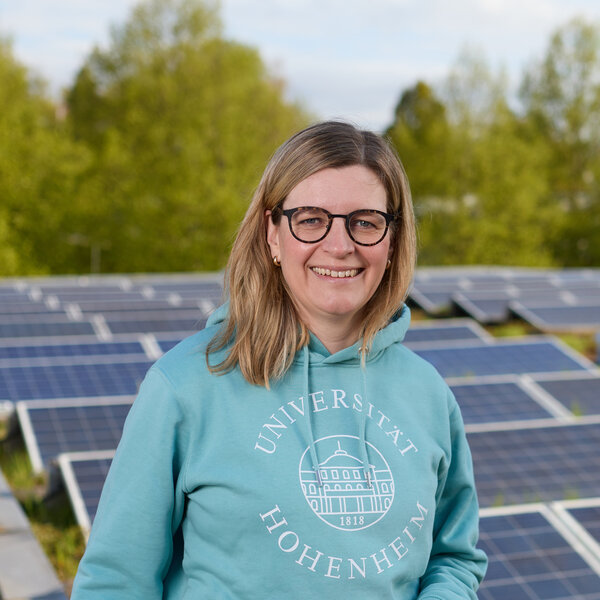
As Chancellor of the University, Dr. Katrin Scheffer deals with a wide range of issues relating to operations and infrastructure, a key field of action for a sustainable university.
As Chancellor, I oversee the administrative departments responsible for human resources, finances, property and buildings, and their operation. Essentially, my team and I have to make sure that everything runs smoothly and that our researchers and academics have the right conditions in which to do their work. The range of responsibilities is very broad. During appointment negotiations, I discuss the resources and facilities for a department with newly appointed professors; in construction meetings with the ministries responsible for finance and higher education, I represent the university’s interests; and I coordinate with different areas of the university to decide which administrative process we should digitize next. And I communicate all day long.
Sustainability in its many facets shapes our profile and comes up in many different areas of my work. In our operations too, we aim to be as sustainable as possible, both in what we do and how we do it. I particularly value opportunities to combine our research interests with the further development of our operations, as in the case of the agrivoltaics system at Ihinger Hof, which we built ourselves.
I also drive forward projects that enable more flexible and efficient use of space. If our buildings and rooms are modern and equipped for flexible use, this contributes to sustainability in several ways: Space is used efficiently and there is less vacancy, meaning we can reduce the amount of space we need overall. And if rooms are well equipped for the work carried out in them, the employees and students who use them are more satisfied.
I could also mention many other areas, such as occupational health and safety, waste management, mobility, procurement, and digitalization.
Heat supply from the university’s own heating plant and its efficient combined heat and power plant remains the single largest factor in the greenhouse gas inventory, accounting for 8,728 metric tons of CO2 equivalents, or 39%. Thanks to successful energy-saving measures, this figure has fallen by 29% compared with 2019. However, further reductions will require extensive construction work on both our utility infrastructure and our buildings. As a rule, the university does not carry out construction work itself; responsibility for this lies with the state-owned property and construction agency Vermögen und Bau. Close coordination is therefore essential to secure the necessary funding for major projects through the state budget and to move individual projects forward in the University’s interests.
For example, there is a feasibility study on heat supply, and initial measures in this area will also be implemented relatively soon using funding from the federal government’s special fund. The next construction phase of the new large research greenhouse will also represent major progress, not only in terms of research conditions, but also because it will be more energy-efficient than the many old greenhouses.
As such, there are several very positive developments underway. However, considerable financial and staffing resources will still be needed to address the renovation backlog and to create infrastructure that can be used flexibly and therefore sustainably, for example in laboratories.
I’m delighted that, by working together, we succeeded in building an agrivoltaics system at Ihinger Hof. It provides excellent infrastructure for a wide range of research questions while also generating electricity.
I experience this same positive, forward-looking spirit in the Green Teams, which develop many other good ideas, both large and small, as well as proposals for putting them into practice across a wide range of fields of action. This is how we make progress, step-by-step.
Thank you to everyone who is working to support the Hohenheim community and make it more sustainable!
April 2026
Name:
Dr. Katrin Scheffer
Role:
Chancellor of the University of Hohenheim
A favorite spot on campus:
There are so many places on campus that I like! One of my favorites is the Audimax, with its natural light, light wood paneling, modern technology, and good acoustics. I also love it when the sun shines into my office in such a way that the prisms on the chandelier cast little rainbows on the wall. A wonderful workplace with a view!
My tip for staying in a good mood:
A walk through the Hohenheim Gardens. There is always something to enjoy in this biodiversity hotspot. I also like to hold employee meetings (MAG – Miteinander – aktiv – gestalten) as ‘Walk & Talks’ in the gardens.